
Over the years, medical science has made some serious advancements, especially in the field of pain management. While there are many different types of treatment for different types of pain, laser therapy has emerged as a promising intervention for pain management. Laser therapy, also known as cold laser therapy, is a new pain management procedure that is often associated with the knee. Patients who are seeking treatment without drugs or surgery are prescribed laser therapy. If you are experiencing severe knee pain, then the doctor might advise you to go for cold laser therapy for knee pain. But how effective is it? It is a question often asked at pain clinics such as PainTherapyCare Brooklyn NYC, and it is worth digging deeper into this subject. To understand the effectiveness of cold laser therapy, it is important to know how this relatively new form of alternative treatment works.
What is laser therapy for knee pain?
It is a non-invasive laser procedure that uses class III or class IV laser for stimulating the affected area and lowering the pain. According to research, it is considered to be the best knee pain relief treatment, whether caused by chronic conditions or injury. Studies show that laser treatment for knee pain is effective because it may:
- Encourage new tissue growth
- Improve cell regeneration
- Stimulate endorphins, which act as a natural painkiller in the body
- Improve blood circulation in the affected area

This type of laser treatment is also known as LLLT or low-level laser therapy. Class III or IV laser is passed over the affected area for a short period. Since it is an LLLT, meaning it doesn’t use a hotter laser, your skin is free from any damage. LLLT lasers or cold lasers are used in numerous wavelengths. Now, as it uses a low-level laser, it is important that the doctor uses the right class of LLLT so that it can penetrate to the right level appropriate for the pain. What a course of treatment involves locally is described in cold laser pain therapy in Brooklyn.
What are the benefits of cold laser therapy on knee pain?
Those suffering from knee injuries due to a disease or trauma could be benefitted from cold laser therapy. Pain specialists such as PainTherapyCare Doctors suggest that bone on the bone knee or joint pain can be easily alleviated with a combination of cold laser treatment and physical therapy. LLLT helps in reducing the inflammation and irritation of the injury while physical therapy strengthens the ligaments and surrounding muscles, ensuring that the pressure on the joints is reduced.
Cold laser therapy is used as it improves the body’s healing mechanism with proper circulation, releases endorphins that fight pain, and supports cell growth. Not only knee pain, but LLLT may also prove beneficial in treating:
- Fibromyalgia
- Carpal tunnel syndrome
- Tennis elbow
- Bursitis

However, there is no conclusive evidence of how and why laser functions like this on your body. On the other hand, the majority of the insurers do not cover cold laser therapy. This may be because there is no clear evidence as to how it is effective. All the studies conducted used different wavelengths of light. As a result, it is difficult to compare one laser to another. But, doctors have shown their faith in the treatment. The evidence base is examined in more depth in an analysis of laser therapy for pain.
What happens during the procedure?
When you search Google for laser treatment for knee pain near me, make sure that you choose the right pain management clinic with experienced doctors and staff. It is not necessary that all multispecialty hospitals and clinics will have the provision for cold laser therapy. There are dedicated clinics and sports centers that practice cold laser treatment.
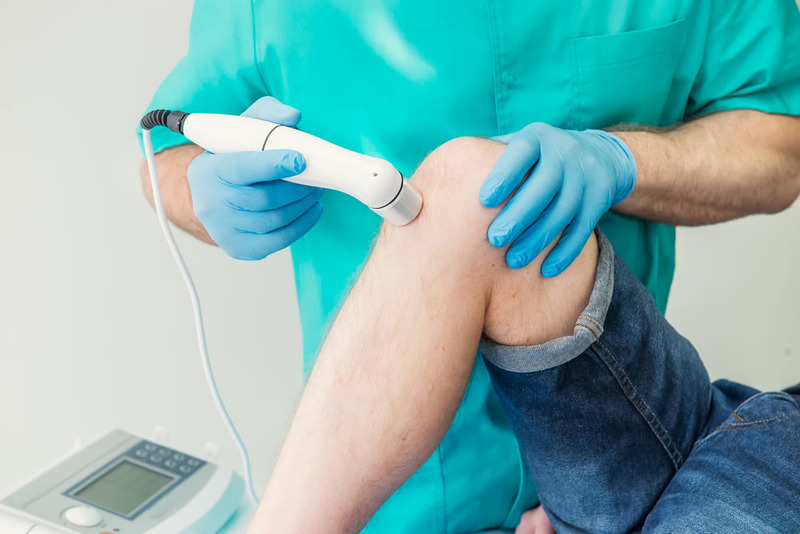
It is administered using a small handheld device. The doctor will hold the device, touching the skin or close to the knee for 30-60 seconds or even a few minutes. The length of time the device is used on your knee will depend on the wavelength used, and the size of the area treated. When the device is switched on, the light energy penetrates your skin and reaches the tissues. The tissues then absorb the light energy, which helps in lowering inflammation and, as a result, it promotes new cell growth.
Depending on the severity of your condition, you may have to visit the doctor several times. Basically, it takes several treatments for your knee to feel better. It can vary from several times per week for a couple of weeks to even months.
Related: hyaluronic acid knee injections in Brooklyn are a non-surgical, drug-free option for knee osteoarthritis pain.
Frequently asked questions
Does severe knee pain respond to laser therapy as well as mild pain?
Severity alone is a poor predictor. What matters more is the cause: laser is aimed at inflammatory and soft tissue components, so severe pain driven by those may respond while severe pain from advanced structural damage may not. That distinction is established at assessment.
Is laser therapy an alternative to knee replacement?
Not a direct substitute. Knee replacement addresses a joint whose surfaces have failed structurally, which no light-based treatment can reverse. Laser is used earlier, to manage pain and inflammation and support function, and in some cases to delay rather than replace the need for surgery.
What happens during a knee laser session?
A handheld device is applied to the skin over the knee and moved across the treatment area for several minutes. There is no incision and no anesthetic. Most people feel nothing or mild warmth, and normal activity resumes straight afterward.
Can laser therapy be combined with knee injections?
Frequently, because they work on different parts of the problem. An injection addresses inflammation or lubrication within the joint, while laser targets the surrounding soft tissue. Sequencing is decided at assessment, since the order can affect how each is tolerated.
Not sure which knee treatment actually fits?
An assessment says plainly which non-surgical options apply. More on knee pain.
Serving Brooklyn, the Five Towns, and Monsey.


