

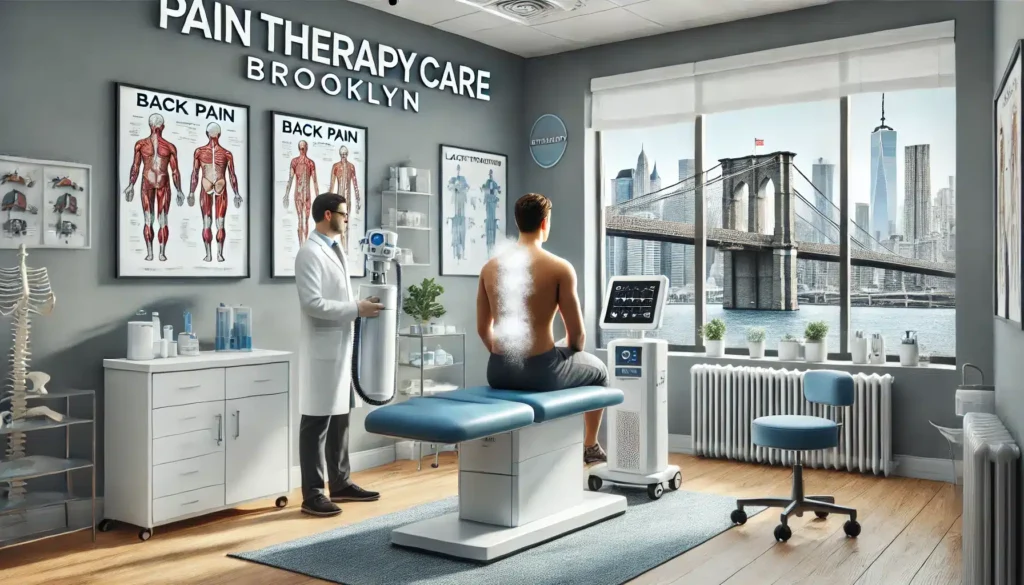
Cold therapy has been used for pain relief for decades, but modern cryotherapy tools have made it easier to apply cold treatment precisely and consistently, which is why it’s become a more common part of back pain treatment plans in Brooklyn clinics. The broader case for cold-based treatment is set out in the benefits of cryotherapy for pain.
How Cryotherapy Works for Back Pain
Cryotherapy uses controlled cold exposure, either localized to a specific area or applied more broadly, to trigger vasoconstriction, a narrowing of blood vessels that can help reduce local inflammation and swelling. Cold exposure also has a numbing effect on nearby nerve endings, which is part of why it can provide short-term pain relief. A plain account of how it is used for pain is in cryotherapy for pain relief.
The evidence for cryotherapy is strongest for acute injuries and flare-ups, where reducing inflammation early can help with recovery. For chronic, ongoing back pain, cryotherapy tends to work best as one part of a broader plan, helping manage flare-ups and discomfort alongside treatments that address the underlying cause. How that applies when back pain is recent rather than long-standing is set out in laser therapy for acute back pain.
What a Cryotherapy Session Involves
Depending on the equipment and your specific condition, cryotherapy may be applied directly to the lower back using a localized device, or as part of a whole-body session. Sessions are generally short, often just a few minutes, and are generally well tolerated. Some patients feel immediate, temporary relief in stiffness and discomfort afterward, though this varies by individual and by the underlying cause of the back pain.
Who Might Benefit
Patients dealing with muscle strain, post-exercise soreness, and inflammatory flare-ups tied to chronic back conditions often find cryotherapy helpful as a complement to physical therapy and other treatments. It’s generally not used as a stand-alone treatment for structural issues like disc herniation or spinal stenosis, which usually require a more comprehensive plan.
Is Cryotherapy Right for You?
Cryotherapy isn’t appropriate for everyone, particularly patients with certain circulatory conditions, so it’s worth discussing your full health history with your provider first. Individual results vary, and cryotherapy is not guaranteed to eliminate back pain.
If back pain has been part of your routine for too long, a pain management provider in Brooklyn can help you figure out whether cryotherapy fits into your treatment plan.
Frequently asked questions
Is cold or heat better for a flare of back pain?
Cold suits the first days after a strain or an inflammatory flare, when reducing swelling and dulling nerve signals is the aim. Heat tends to suit ongoing muscular tightness and stiffness, particularly before movement or stretching. Many people alternate between them. If one clearly helps and the other does not, that response is a reasonable guide to follow.
How soon after straining your back should cold be applied?
Within the first day or two is the usual window, in short applications with breaks rather than continuously. After roughly two to three days the inflammatory phase settles and cold becomes mainly a way of dulling pain rather than limiting swelling. Gentle movement during that period generally matters more to recovery than the choice of temperature.
Does cold actually reach deep enough to affect the spine?
Not directly, in most cases. Cooling is greatest at the skin and the first layer of tissue beneath it, and the deeper spinal structures change temperature far less. The effect on back pain is thought to come largely from slowed nerve conduction and reflex muscle relaxation near the surface rather than from chilling the joints or discs themselves.
Can cold therapy leave back muscles feeling stiffer?
It can, temporarily. Cold reduces the elasticity of muscle and slows nerve conduction, so tissue often feels tighter and less responsive for a short period, which is one reason cold is not applied immediately before demanding activity. Letting the area rewarm before stretching or exercising usually settles it. Stiffness that persists after sessions is worth mentioning to a provider.
Back pain that keeps coming back?
An evaluation looks at what maintains the problem, not just what triggered it. More on lower back pain.
Book an AssessmentServing Brooklyn, the Five Towns, and Monsey.


