

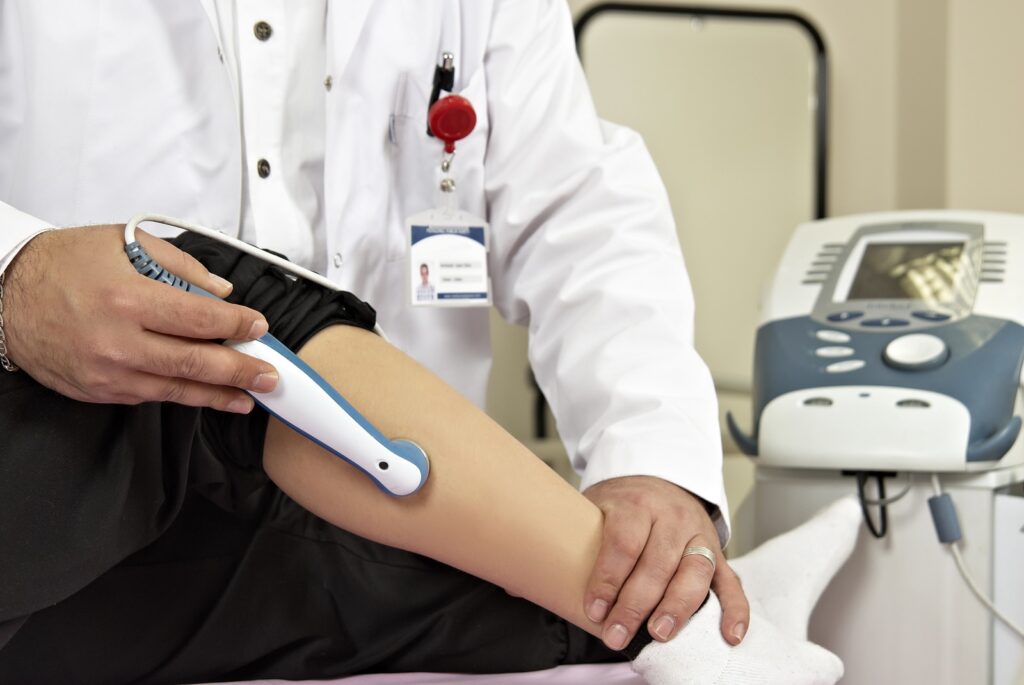
Pulsed Electromagnetic Field therapy, commonly known as PEMF, has been used for years to support bone and tissue healing. Here is an overview of how it works and where it fits among today’s pain management options. How it is being used locally is described in how EMTT therapy is changing pain management in Brooklyn.
What PEMF therapy is
PEMF uses low-frequency electromagnetic fields delivered to the body to potentially support cellular repair processes. It is a non-invasive, drug-free option that has been studied for its role in bone healing and tissue recovery.
How it may support healing
PEMF is thought to work at the cellular level, potentially encouraging the body’s natural regenerative processes in bone and soft tissue. It does not involve needles, incisions, or medication.
Where PEMF differs from EMTT
PEMF and EMTT are related but distinct technologies. EMTT uses higher-intensity electromagnetic energy and is generally used to target more acute inflammation and tissue repair, while PEMF has traditionally been studied more for lower-intensity, longer-term applications like bone healing.
Discussing your options with a provider
Whether PEMF, EMTT, shockwave therapy, or Class IV laser therapy is the right fit depends on the specific condition being treated. A pain management evaluation can help determine which drug-free technology matches your needs.
If you are exploring non-invasive options for bone or tissue healing, a conversation with your provider can clarify which technology is appropriate for your specific case.
Frequently asked questions
Are home PEMF mats the same as clinical PEMF devices?
They are not equivalent. Consumer mats generally deliver far lower field intensity than clinical systems and are marketed for general wellness rather than a specific diagnosis. That does not make them harmful, but expecting a home mat to match a supervised device aimed at a defined target is unrealistic, and the claims made for consumer products vary widely in quality.
Can a home PEMF mat interfere with an implanted device?
Yes, that is the main reason implanted electronic devices are a contraindication for consumer magnetic mats as well as clinical equipment. A pulsed magnetic field can disturb a pacemaker, defibrillator, neurostimulator or programmable pump regardless of the device’s power. Anyone with an implant should clear any magnetic therapy, bought or clinical, with the clinician who manages it before use.
Can PEMF help a fracture that is not healing?
Bone stimulation is among the longest-studied uses of electromagnetic therapy, and it is sometimes considered for slow-healing or non-united fractures. It is used as an addition to orthopedic management rather than in place of it, and suitability depends on the fracture pattern, the fixation and why healing has stalled. An orthopedic assessment should come first.
What does a PEMF session feel like compared with EMTT?
Both are usually painless, and neither involves needles, incisions or heat at the skin. Higher-intensity electromagnetic treatment can produce a faint tapping or small muscle twitch in the treated area, while lower-intensity fields are frequently felt as nothing at all. Clothing generally stays on for both, and people typically return to ordinary activity immediately afterwards.
Wondering whether EMTT applies to your condition?
A physician-led evaluation matches the technology to the diagnosis. More on EMTT therapy.
Serving Brooklyn, the Five Towns, and Monsey.


