

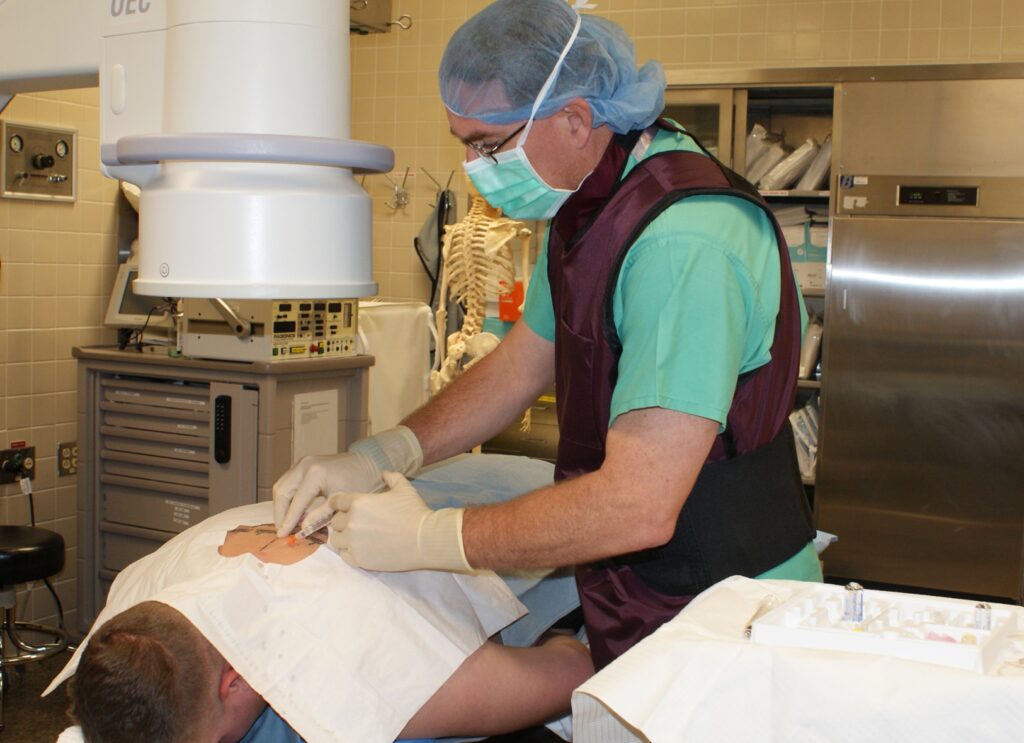
Fluoroscopic-guided injections are one of the more precise interventional options available to Brooklyn pain patients. Here is what the procedure actually involves. How fluoroscopy is used across pain procedures is covered in fluoroscopic-guided injections for pain relief.
What fluoroscopy adds to an injection
Fluoroscopy is a real-time X-ray imaging technique that lets a physician see exactly where the needle is positioned before delivering medication. This precision is meant to improve accuracy compared to a standard, unguided injection.
Conditions this technique may be used for
Fluoroscopy-guided injections are commonly used for spinal conditions, including irritated nerves and inflamed joints, where precise placement of medication can make a meaningful difference in the level of relief a patient experiences.
What to expect during the procedure
The procedure is done in a clinical setting, typically takes under an hour, and most patients are able to go home the same day. Mild soreness at the injection site in the days following is common.
Understanding realistic outcomes
Relief from these injections varies by patient and by condition, and is often temporary rather than permanent. They are frequently used as one part of a broader treatment plan that may also include drug-free options like shockwave or laser therapy.
A consultation with a pain management specialist can help determine whether a fluoroscopy-guided injection fits your specific diagnosis and treatment goals.
Frequently asked questions
Is the contrast dye used in these injections a problem for people with allergies?
It can be, so any previous reaction to contrast should be reported before scheduling. Options include performing the procedure without contrast, using a different agent, or premedicating with steroids and antihistamines. A shellfish allergy, despite the common belief, is not the same thing as a contrast reaction and is not treated as a reason to avoid the procedure.
What is the difference between a nerve block and a steroid injection?
A nerve block delivers anesthetic to interrupt signals from a specific nerve, often as much to identify the pain source as to treat it, while a steroid injection places anti-inflammatory medication near irritated tissue with the aim of lasting longer. Many procedures combine both, which is why a short numb period can come before any anti-inflammatory effect appears.
What does it mean if a guided injection helps for only a few weeks?
It is still useful information. Short-lived relief usually confirms the medication reached the right structure, which supports the diagnosis even though the effect faded. From there a provider may repeat the injection within safe limits, add rehabilitation to address what keeps irritating the area, or consider a longer-acting procedure aimed at the same target.
Is numbness or weakness in a leg normal after a spinal injection?
A temporary numb or heavy feeling in a limb is common, because local anesthetic reaches nearby nerves, and it typically wears off within hours. Standing and walking should be done carefully until normal sensation returns. Numbness or weakness that appears later, gets worse, or affects bladder or bowel control is not expected and needs urgent assessment.
Unsure whether an injection is the right next step?
A physician-led evaluation weighs it against the alternatives. More on ultrasound guided injections.
Serving Brooklyn, the Five Towns, and Monsey.


