
Extracorporeal shockwave therapy, often shortened to ESWT, is a non-invasive treatment that uses acoustic pressure waves to target areas of chronic pain, particularly in tendons and connective tissue that haven’t responded to rest, stretching, or other conservative care.
How Shockwave Therapy Works
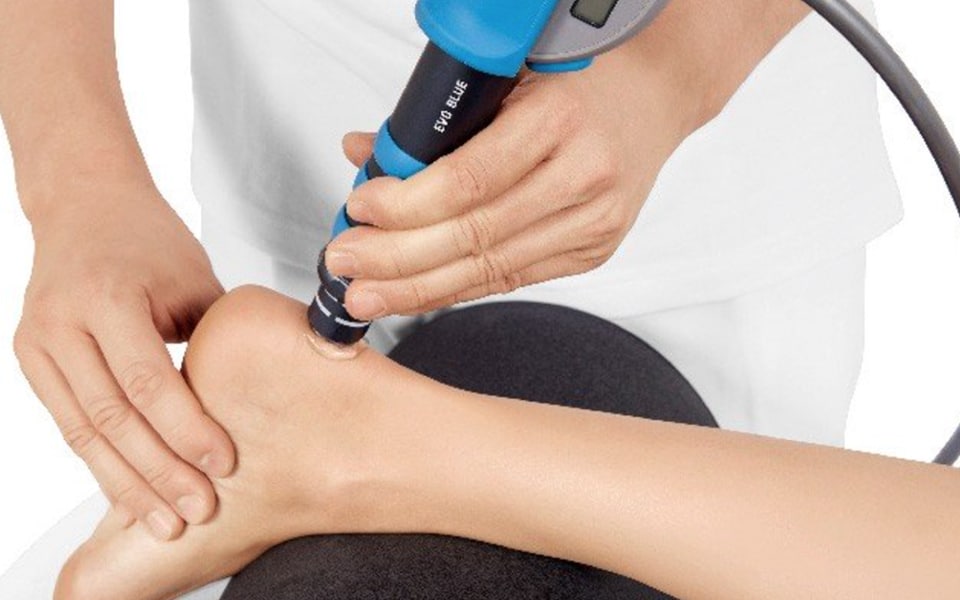
During treatment, a handheld device delivers acoustic waves through the skin to the targeted area. These pressure waves are thought to stimulate local blood flow and trigger the body’s natural repair response in tissue that has become chronically irritated or degenerated. ESWT is most established for conditions like plantar fasciitis, tennis elbow, and calcific tendinitis of the shoulder, where studies suggest it can help reduce pain over the course of a treatment series. Its use for heel pain specifically is covered in shockwave therapy for plantar fasciitis.
It typically takes more than one session to see meaningful change. Most treatment plans involve a series of sessions spaced about a week apart, and results tend to build gradually rather than appear after a single visit.
What Conditions It’s Used For
In Brooklyn practices, shockwave therapy is most commonly used for plantar fasciitis, Achilles tendinopathy, tennis and golfer’s elbow, and other chronic tendon injuries. It’s generally considered for patients who have already tried rest, stretching, and physical therapy without enough improvement, and who want to explore a non-surgical option before considering more invasive treatments.
What a Session Feels Like
Shockwave therapy can feel like a series of firm taps or pulses over the treatment area, and some patients notice mild soreness for a day or two afterward, similar to how a deep tissue massage can feel the next day. Sessions are generally well tolerated, and serious side effects are uncommon, but it’s not comfortable for everyone, and your provider will adjust intensity based on what you can tolerate.
Is Shockwave Therapy Right for You?
ESWT isn’t appropriate for every type of pain, and it’s not a fit for certain medical conditions, so a proper evaluation matters before starting. Individual results vary, and shockwave therapy is not guaranteed to eliminate pain.
If chronic tendon or heel pain has been slowing you down, a Brooklyn pain management provider can help you figure out whether shockwave therapy fits your treatment plan.
Frequently asked questions
Is it okay to keep exercising between shockwave sessions?
Usually yes, within limits. Light activity and prescribed rehabilitation exercises are commonly continued, while providers often advise easing off the loading that aggravates the tendon, such as hill running or jumping, for a day or two after each session. The specifics depend on which tendon was treated and how sore the area feels afterward.
What is the difference between radial and focused shockwave?
They deliver energy differently. Radial devices spread a pressure wave outward from the applicator and concentrate their effect closer to the surface, while focused devices direct energy to a point at a chosen depth. Superficial problems such as heel or elbow pain are often treated with radial devices, and deeper targets may call for focused ones.
Does shockwave therapy break up a heel spur?
No, and that is not the aim. A heel spur seen on an X-ray is frequently an incidental finding rather than the source of pain, which usually comes from the irritated fascia or tendon attaching nearby. Shockwave is directed at that soft tissue, so the spur typically remains on the image whatever happens to the symptoms.
Should anti-inflammatory medication be paused during a course of shockwave?
Some providers suggest limiting it. The reasoning is that shockwave is thought to provoke a short-lived healing and inflammatory response in the tissue, and routine anti-inflammatories may work against that. Any change to medication belongs in a conversation with the prescriber, particularly for anyone taking those drugs for another condition.
Wondering whether shockwave therapy is right for you?
An assessment says honestly whether it fits the condition. More on shockwave therapy.
Book an AssessmentServing Brooklyn, the Five Towns, and Monsey.


