

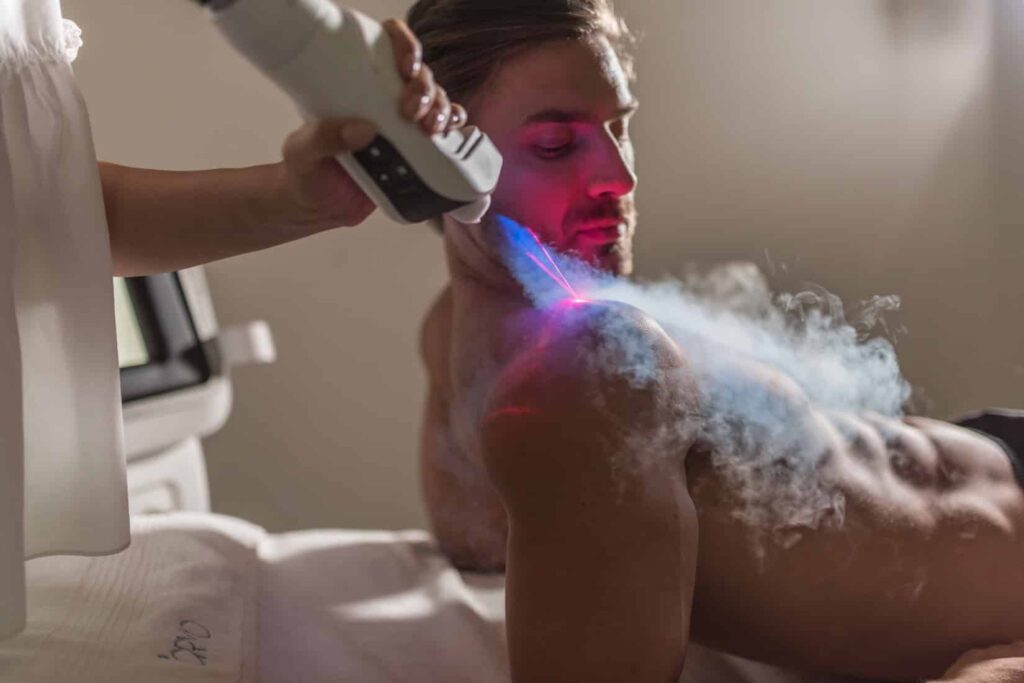
Cryotherapy has grown from an athletic recovery tool into a mainstream option for chronic pain management. Here is what it involves and how it may help Brooklyn patients dealing with ongoing pain. How it applies to chronic pain is covered in cryotherapy for chronic pain relief.
What cryotherapy actually is
Cryotherapy exposes the body, or a specific area of the body, to very cold temperatures for a short period of time. The goal is to trigger the body’s natural response to cold, which may help reduce inflammation and support recovery.
How it may help with pain
Many patients report a possible reduction in swelling and discomfort after cryotherapy sessions, particularly for joint and soft tissue pain. It is often used alongside other treatments rather than as a stand-alone solution.
What a typical session looks like
Sessions are generally brief, often lasting just a few minutes, and are done under supervision. Patients typically feel a noticeable cooling sensation followed by warmth as circulation returns to the treated area afterward.
Who might consider cryotherapy
Patients managing arthritis, muscle soreness, or inflammation-related pain sometimes look to cryotherapy as a complement to their broader treatment plan, which may include drug-free technology like shockwave therapy or Class IV laser therapy.
A pain management evaluation can help determine whether cryotherapy fits your specific condition, or whether another drug-free approach may serve you better.
Frequently asked questions
Is cryotherapy any different from just using an ice pack?
The exposure is far colder and much shorter, and it is delivered under supervision rather than left resting on the skin. An ice pack cools tissue slowly and locally across many minutes, while cryotherapy uses brief extreme cold to provoke a stronger response. Whether that difference produces better results for a particular condition is still debated in the research.
What is the difference between whole-body and localized cryotherapy?
Whole-body treatment exposes most of the body to extreme cold in a chamber for a few minutes, while localized treatment directs cold at a single joint or muscle group. Localized application is the more conventional choice for one specific painful area. Whole-body use is more often chosen for general recovery, and the evidence supporting it is less settled.
Is cryotherapy safe for someone with heart or circulation problems?
It needs clearance first. Extreme cold briefly raises blood pressure and heart rate, so unstable heart disease, poorly controlled hypertension, Raynaud’s phenomenon and cold urticaria are usually reasons to avoid it. Reduced sensation from neuropathy also matters, because cold injury becomes much harder to notice. A medical history review before a first session is standard practice.
Should cryotherapy be used right after exercise or later in the day?
Timing depends on the goal. Cold applied immediately after hard exercise can ease soreness, but some research suggests routinely cooling straight after strength training may blunt part of the training adaptation. When cryotherapy is being used for pain management rather than athletic recovery, sessions are usually arranged around the treatment schedule rather than around workouts.
Wondering whether cryotherapy applies to your pain?
A physician-led evaluation matches the treatment to the diagnosis. More on cryotherapy.
Serving Brooklyn, the Five Towns, and Monsey.


