

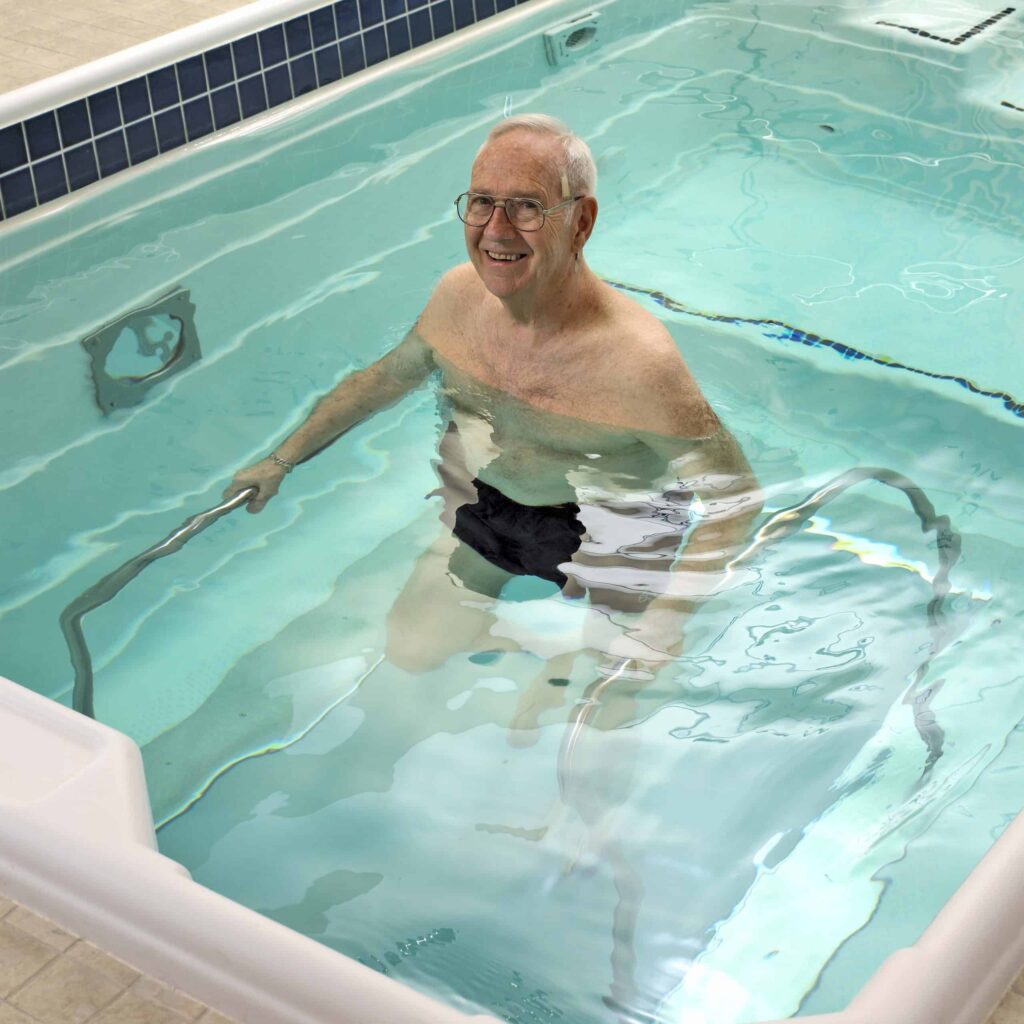
Water-based therapy has long been used in physical rehabilitation, and for good reason. Reducing the effect of gravity on painful joints can make movement possible for patients who otherwise struggle on land. Why water works is discussed in the science of aqua therapy.
Why water reduces stress on painful joints
Buoyancy supports a large percentage of body weight when a person is submerged, which takes pressure off the knees, hips, and spine. This allows some patients to move and stretch in ways that would be too painful on dry land.
Conditions that may benefit
Aqua-based rehabilitation is often used to support recovery from arthritis, post-surgical stiffness, and general chronic joint pain. It is typically used as part of a broader recovery or maintenance plan rather than a stand-alone treatment.
What a session generally involves
Sessions usually include a combination of gentle range-of-motion exercises and light resistance work in a warm pool, guided by a trained therapist. The water’s resistance can also help build strength gradually without the joint impact of traditional exercise.
How this fits into a complete pain management plan
Aqua therapy works best alongside other treatment, not instead of it. Many non-surgical pain programs are built around drug-free technology, shockwave therapy, EMTT, and Class IV laser therapy, to directly target the source of pain, and a care team can help coordinate complementary rehabilitation like aqua therapy where it fits your recovery plan.
If joint or back pain has made land-based exercise difficult, ask your provider whether a combined approach makes sense for your condition.
Frequently asked questions
How much weight does water actually take off a painful joint?
Enough to change what movement is possible. The deeper a person stands, the more load the water carries, so waist-deep water removes a meaningful share of body weight and chest-deep removes considerably more. Therapists use depth as a dial, starting deeper when a joint is very painful and working toward shallower water as tolerance improves.
Does exercising in water build real strength or only keep joints moving?
It can build strength, because water resists movement in every direction and that resistance increases the faster a limb is pushed against it. What water does not provide is impact loading, which bone and tendon also need to stay robust. That is why pool work is usually one stage of a program rather than the whole of it.
Can aqua therapy be done at a community pool or a gym pool?
Sometimes, if the water is warm enough and the depth suits the exercises, though many public pools are kept cool for lap swimming, which can make stiff joints tighten rather than relax. Early supervision also matters, since the exercises have to match the diagnosis. A therapist can often adapt a program for another pool once technique is established.
Can aqua therapy be combined with shockwave or laser treatment?
Usually yes, and the two are commonly scheduled around each other rather than treated as alternatives, since one targets the painful tissue directly while the other restores movement and strength. Sequencing within a day is what providers tend to watch, often keeping vigorous pool work away from the period right after a session when the area may be sore.
Pain that makes land-based exercise difficult?
An assessment looks at what you can load and how. More on aqua therapy.
Serving Brooklyn, the Five Towns, and Monsey.


