
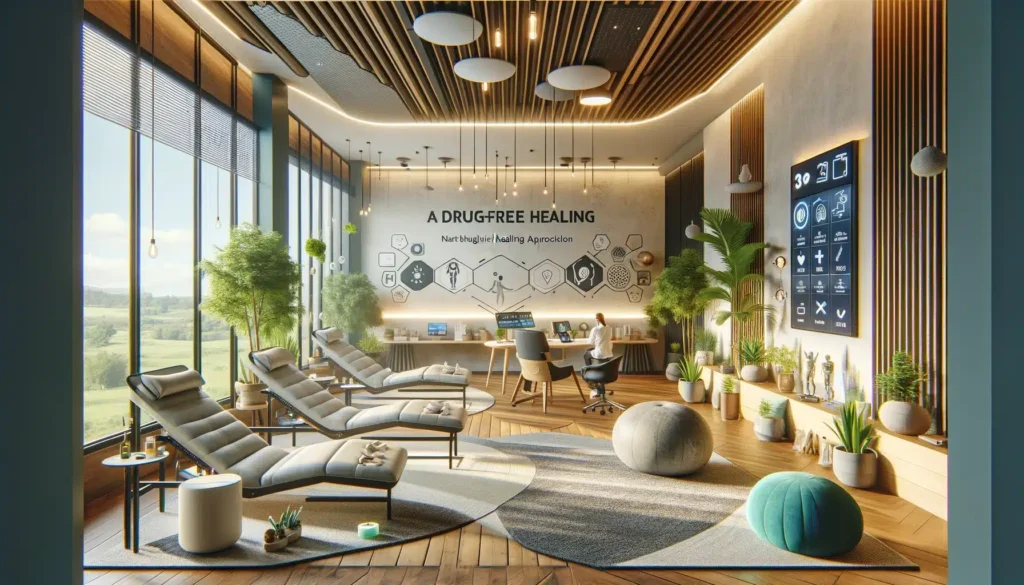
Healing does not have to start with a prescription. A drug-free approach to pain management focuses on treating the source of pain directly, using technology rather than medication as the first step.
What a drug-free approach actually means
Rather than relying on pain medication to mask symptoms, drug-free treatment uses technology such as shockwave therapy, EMTT, and Class IV laser therapy to work directly with the body’s own healing processes.
Why patients are seeking this option
Concerns about medication dependency, side effects, and the temporary nature of pills have led many patients to ask about alternatives before starting or continuing a prescription-based plan.
How these therapies work together
Each modality serves a different purpose. Shockwave therapy targets deep tissue and tendon-related pain, EMTT supports tissue repair through electromagnetic energy, and Class IV laser therapy addresses inflammation and soft tissue healing. Used together or individually, they give a pain management plan more than one tool.
Who this approach may help
Patients managing joint pain, tendon injuries, back pain, and chronic soft tissue conditions are common candidates for a drug-free plan, especially those who want to explore non-invasive options before considering surgery.
Empowering healing starts with an honest evaluation of your condition and your goals. A number of Brooklyn clinics offer this drug-free approach alongside broad insurance access, including Medicaid.
Frequently asked questions
Do you have to stop pain medication to start drug-free treatment?
No. Drug-free describes the treatment itself, not a requirement to come off anything already prescribed. Many patients continue their medication while treatment begins, then discuss reducing it with the prescriber if symptoms improve. Stopping certain medications abruptly can be unsafe, so any change belongs with the clinician who prescribed it rather than the one delivering the therapy.
How does a provider decide which of these therapies to start with?
It follows the diagnosis rather than a fixed order. Depth and type of tissue matter most, since tendon and deeper structures point one way and superficial soft tissue inflammation another. History, previous treatment, and whether the problem is recent or long standing also shape the choice. Plans are commonly reviewed after an initial block of sessions and adjusted from there.
Can shockwave, EMTT and laser therapy be used in the same session?
Sometimes, and it is reasonably common for two of them to be combined in one visit when they address different aspects of the same problem. Stacking everything at once is not automatically better, since it makes it harder to tell what is helping. Providers often introduce them in steps for that reason.
Is drug-free treatment an option for someone who cannot take anti-inflammatories?
Often yes, and that is one reason patients are steered toward it. People with stomach, kidney, bleeding or blood pressure concerns, and those already taking several medications, may have limited drug options. These therapies act on the tissue rather than through the bloodstream, though each still has its own cautions that an evaluation has to check first.
Pain that has not responded to what you have already tried?
A physician-led evaluation finds the driver first, then builds a non-surgical plan around it. More on chronic pain.
Serving Brooklyn, the Five Towns, and Monsey.


