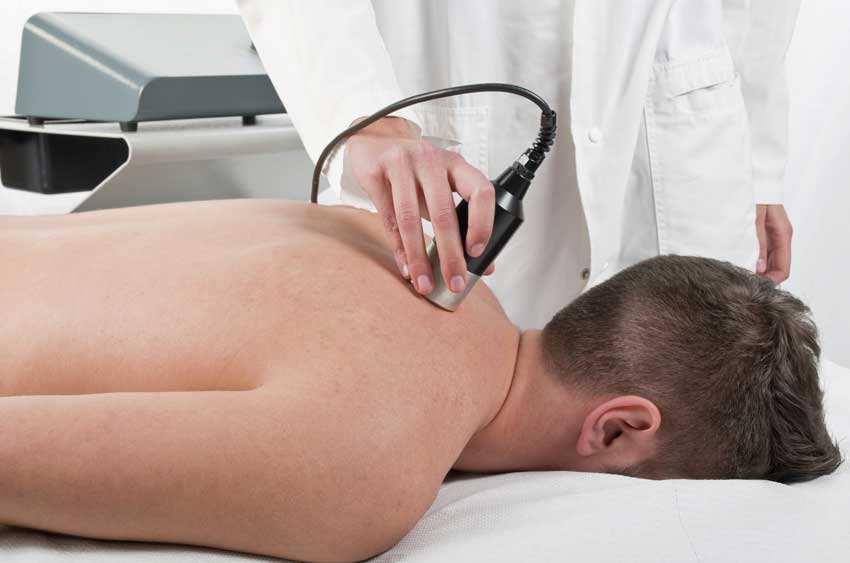
Cold laser therapy, also known as low-level laser therapy (LLLT) or photobiomodulation, is a non-invasive treatment that uses specific wavelengths of light to target inflamed or injured tissue. Unlike surgical or high-powered lasers, cold lasers don’t cut or heat tissue. Instead, they deliver light energy that the body’s cells absorb, which is why the treatment is often described as painless and drug-free.
How Cold Laser Therapy Works
The light from a cold laser penetrates the skin and is absorbed by mitochondria, the energy-producing structures inside cells. Research on photobiomodulation suggests this process can support cellular energy production and may help modulate local inflammation. That’s the theory behind why cold laser is used for a range of musculoskeletal complaints, from tendon irritation to joint pain.
It’s worth noting that the evidence for cold laser therapy varies by condition, and results are not the same for every patient. It tends to work best as one component of a broader treatment plan rather than a stand-alone solution. What the research supports is reviewed in the science behind laser therapy for pain.
Conditions Commonly Treated
In Brooklyn clinics, cold laser therapy is most often used for soft tissue injuries, tendinitis, joint pain related to arthritis, and areas of localized inflammation that haven’t responded well to rest alone. It’s frequently combined with physical therapy, TECAR, or other non-surgical modalities depending on what’s driving a patient’s symptoms.
What a Session Feels Like
A cold laser session is quick, usually somewhere between five and fifteen minutes depending on the area being treated. Most patients feel little to nothing during the treatment itself, maybe a mild warmth. Cold laser therapy is generally well tolerated, and side effects are uncommon. Because there’s no downtime, patients can typically go straight back to their day afterward.
Is Cold Laser Therapy Right for You?
Cold laser isn’t the right fit for every diagnosis, and individual results vary. A proper evaluation is the only reliable way to know whether it’s a good match for what you’re dealing with, and whether it should be paired with other treatments.
If you’re in Brooklyn and curious whether cold laser therapy could help with your pain, a provider who offers it can walk you through what to expect at a consultation.
Frequently asked questions
What is the difference between cold laser and Class IV laser therapy?
Mainly power. Cold or low-level laser uses low-output light that does not heat tissue, while Class IV devices deliver much higher power and produce noticeable warmth, which allows energy to reach deeper structures. Both aim at similar effects on cell activity. The choice usually comes down to how deep the target tissue sits and how sensitive the area is.
Can cold laser therapy be used while taking medication that causes sun sensitivity?
It should be raised before the first session. Some antibiotics, diuretics, retinoids and other photosensitizing drugs make skin react more strongly to light, and a provider may reduce the dose, shift the treated area or wait until the course is finished. The exposure is not the same as sunlight, since wavelength and depth differ, but caution is standard practice.
Can cold laser be used over a knee or hip replacement?
Usually yes. Low-level light does not heat metal the way some electrical and deep heating treatments can, so implants, plates and screws are not generally a barrier. The hardware should still be mentioned, especially after recent surgery, since treatment directly over a fresh incision is normally postponed until the wound has fully healed.
Is cold laser therapy the same as a red light panel bought for home use?
They share a principle but differ in delivery. Home panels spread low-intensity light broadly across the body, while clinical laser devices deliver focused light to a specific target at a controlled dose chosen for that tissue. For a defined tendon or joint problem, that targeting is the difference that matters, so a panel is not a direct substitute for a supervised plan.
Wondering whether laser therapy applies to your pain?
A physician-led evaluation finds the driver first, then matches the treatment. More on laser therapy.
Book an AssessmentServing Brooklyn, the Five Towns, and Monsey.


