
🏊 Aqua Therapy: Impact-Free Rehabilitation That Works
Move Without Pain: How Water Creates a Safe Healing Environment
When walking, bending, or even standing becomes painful, many traditional physical therapy approaches can feel overwhelming or even risky.
Aqua Therapy, also known as aquatic physical therapy, offers a transformative solution. By taking weight off the joints while increasing resistance,
water enables healing without impact or fear of reinjury.
In Brooklyn, Aqua Therapy is often a cornerstone of recovery plans for seniors, post-surgical patients, and individuals with chronic pain.
It provides a gentle yet effective environment to regain strength, balance, and mobility. Especially when land-based therapy is not tolerated.
Combined with an integrated model of care, Aqua Therapy becomes more than rehabilitation. It becomes restoration.
🌊 Why Water Changes Everything in Rehab
- 🧘♂️ Buoyancy: Offloads up to 90% of body weight, reducing joint stress and compression.
- 💪 Resistance: Provides constant multi-directional challenge to muscles, without external weights.
- 🌀 Hydrostatic pressure: Improves circulation, reduces swelling, and supports balance.
- ❄️ Temperature regulation: Promotes relaxation and reduces muscle guarding.
This allows for earlier intervention after injury or surgery and helps reduce pain while improving confidence in movement. Patients with low exercise tolerance often find water to be their first safe place to reconnect with movement.
🏋️♀️ Functional Benefits Beyond Pain Relief
- 🔄 Improves proprioception and motor control
- 🫁 Enhances respiratory capacity with water resistance
- ⚖️ Restores postural alignment through natural balance training
- ⛑️ Boosts neurological responses for coordination and reflexes
These neuromuscular gains are critical in restoring autonomy, especially in patients with a history of instability or falls.
In many cases, Aqua Therapy becomes a bridge, retraining the body for land-based strength without risking overload or re-injury.
🧠 Who Benefits Most from Aqua Therapy?
- Seniors with joint stiffness, balance issues, or fall history
- People recovering from hip or knee replacements
- Patients with rheumatoid arthritis or osteoarthritis
- Individuals with fibromyalgia or chronic fatigue syndrome
- Neurological cases (Parkinson’s, multiple sclerosis, stroke recovery)
- Athletes rehabbing from tendon, ankle, or knee injuries
- Overweight or obese individuals who cannot tolerate land exercise
Water offers a low-risk path to restore function. Without setbacks or fear.
It is also an excellent tool for patients preparing for surgery or reconditioning after long-term illness.
⚙️ Integrating Aqua Therapy into a Full Plan
In practice, one tool alone is rarely enough. Aqua Therapy is often combined with other neuromuscular therapies:
- EMTT (Electromagnetic Transduction Therapy): to modulate nerve sensitivity
- Shockwave Therapy: for chronic tendon or plantar fascial recovery
- AIMS (Intramuscular Stimulation): for postural re-education and muscle activation
- Hyaluronic Acid (HA) Injections: in degenerative knee or hip pain
- Cryotherapy: post-exercise for inflammation control and recovery
- Custom Physical Therapy: focused on gait, mobility, and function
This integrative approach ensures that recovery is faster, more comprehensive, and longer-lasting.
📈 Measurable Outcomes After 4–6 Weeks
- 💡 Confidence in movement, even when previously afraid to walk or turn
- 🧍♂️ Improved balance and reduced fall risk
- 🔁 Greater joint mobility without pain
- 💤 Better sleep due to reduced discomfort
- 🧠 Enhanced emotional well-being from re-engaging in movement
- 🔓 Increased joint range of motion
- 🩰 Renewed ability to engage in light physical activities
- 🗓️ Shorter recovery timelines post-surgery or injury
- ❤️ Long-term adherence to rehabilitation due to positive experience
Each session builds momentum, turning avoidance into motion, fear into function, and effort into autonomy.
🌐 Why Water Therapy Is Ideal for Brooklyn’s Aging and Active Communities
In a fast-paced city, injuries and chronic pain often push people to the sidelines. Aqua Therapy provides a gentle yet effective reset for:
- Returning to work after injury
- Caring for grandchildren without fear of pain
- Rebuilding strength post-COVID or illness
- Avoiding surgery through function-based care
- Managing conditions like lupus or chronic stress syndromes
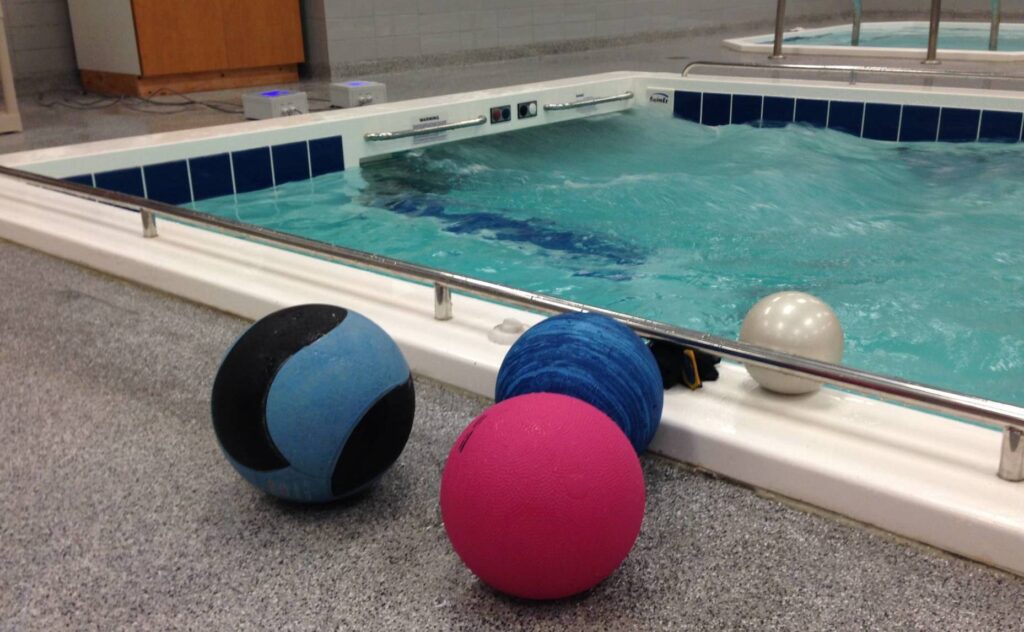
A well-equipped aquatic facility is built for safety, privacy, and one-on-one care in water. With trained professionals guiding each session,
patients gain confidence in motion, and in life. Recovery shouldn’t feel intimidating. In the water, it doesn’t have to be.
🧭 Is Aqua Therapy Right for You?
Ask yourself:
- Do I feel restricted by pain or fear of falling?
- Have land therapies been too aggressive or painful?
- Do I need a softer, safer place to start moving again?
If the answer is yes, water may be the medium that unlocks your recovery. It is worth exploring this approach with
an open mind, and an open body ready to float, reset, and strengthen.
Frequently asked questions
Is aquatic therapy useful before surgery, not only after it?
It can be. Entering a planned joint replacement or spinal procedure with better strength, range of motion and cardiovascular fitness generally makes the early recovery period easier, and water allows that conditioning when land exercise provokes too much pain. Timing and suitability should be agreed with the surgical team rather than arranged independently.
Is swimming laps the same thing as aquatic therapy?
No. Lap swimming is a repetitive whole-body exercise driven largely by the arms and shoulders, and it can aggravate necks and shoulders in people who already have problems there. Aquatic therapy uses specific supervised movements in shallow water to target particular joints, muscles and balance responses, with resistance and support adjusted to what the person tolerates.
Can pool chemicals be a problem for sensitive skin or asthma?
They can be for some people. Chlorine by-products in the air above an indoor pool may irritate the airways in poorly ventilated facilities, and prolonged immersion can dry sensitive skin or aggravate eczema. Rinsing and moisturising afterwards helps, and anyone with asthma or a skin condition should raise it before starting rather than after a reaction.
Is water therapy safe with a healing surgical incision?
Not until the wound is fully closed and the surgeon has cleared it. Immersion before that point carries an infection risk regardless of how well a pool is maintained. Because timelines differ by procedure and by person, written clearance is the usual requirement, and land-based work generally fills the gap in the meantime.
Pain that makes land-based exercise difficult?
An assessment looks at what you can load and how. More on aqua therapy.
Serving Brooklyn, the Five Towns, and Monsey.


